The under-reporting problem
A frequent blind spot in the medical history
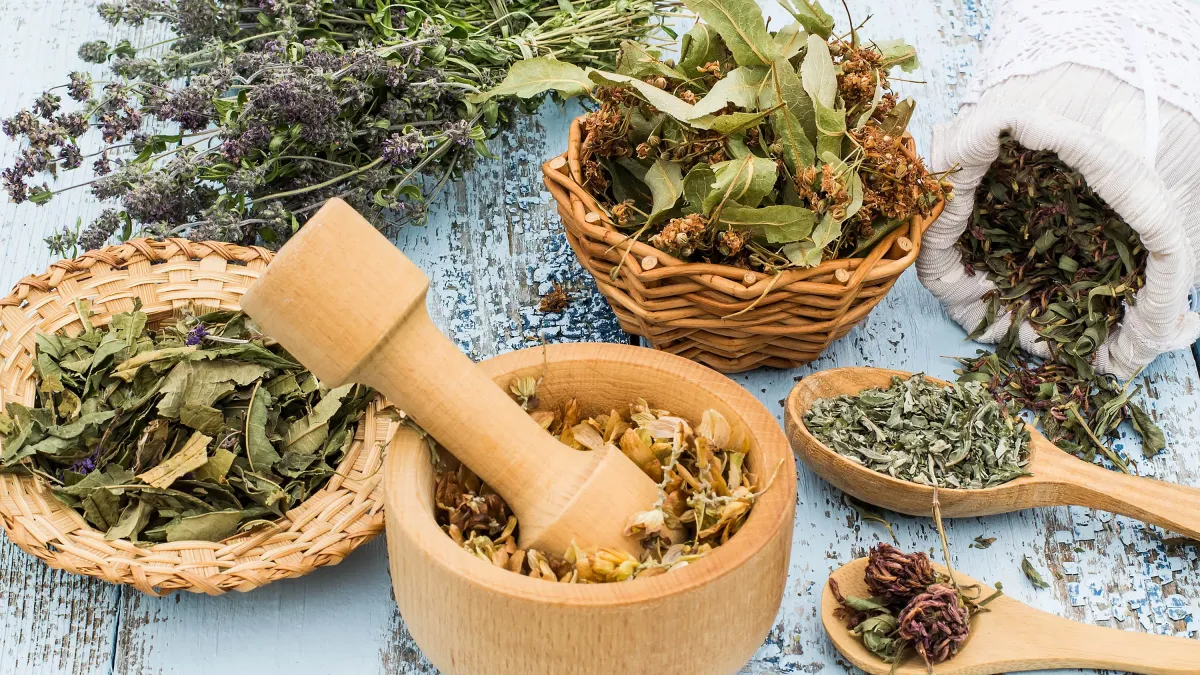
Herbal dietary supplements are widely perceived by the public as "natural" and therefore harmless products, unrelated to conventional prescription drugs — a perception that largely explains their massive under-reporting during medical interviews, including before a surgical procedure.
A study of patients presenting for surgery showed that while nearly 5% were taking an herbal supplement, only two cases out of more than 130 had been recorded in their medical chart before the intervention — illustrating the scale of the traceability problem.
Some herbs have confirmed drug interactions, others are suspected based on solid preclinical data, or are commonly recognized as major interactions — potentially leading to severe adverse events. The "natural" label on a product is in no way a guarantee of pharmacological safety.
Herbs with documented bleeding risk
Several commonly consumed herbs and supplements affect coagulation or platelet function through varied mechanisms, with uneven levels of evidence. This dimension is directly relevant to oral surgery, adding to the already documented risk of antithrombotic therapy (see dedicated articles on DOACs, VKAs, and antiplatelet agents).
Garlic (Allium sativum)
- A systematic review concluded, based on pooled data, that garlic does in fact predispose to surgical bleeding
- Antiplatelet effect through inhibition of aggregation
- Robust association independent of concurrent anticoagulant use
Ginkgo biloba
- Inhibition of platelet-activating factor — a mechanism distinct from NSAIDs or aspirin
- Association with surgical bleeding documented across several reviews, particularly in combination with anticoagulant therapy
- Commonly used for mild cognitive decline and memory — the typical user profile is often older, a population already at increased bleeding risk (see article on polypharmacy)
Ginseng
- Antiplatelet properties reported, in addition to a potential effect on blood glucose (see Section 05)
- Frequently consumed as a stimulant or general tonic
Other herbs to watch
- Hawthorn: strong association with surgical bleeding according to some recent data
- Turmeric, ginger, fish oil/omega-3, vitamin E: coagulation effects reported, with variable levels of evidence across studies
- Echinacea, aloe vera: weaker or inconsistent association with surgical bleeding
St. John's Wort: the major enzyme inducer
The most problematic herb in terms of drug interactions
St. John's Wort (Hypericum perforatum), traditionally used for mild to moderate depression and anxiety, is a potent inducer of the CYP3A4 cytochrome and the P-glycoprotein transporter. This enzymatic induction reduces the effective concentration of numerous drugs metabolized through this pathway — an interaction mechanism affecting roughly forty molecules by some estimates.
| Drug affected | Consequence of the interaction with St. John's Wort |
|---|---|
| Warfarin (VKA) | Reduced anticoagulant effect — thrombotic risk |
| Oral contraceptives | Reduced contraceptive efficacy — risk of unintended pregnancy |
| Cyclosporine, tacrolimus (immunosuppressants) | Risk of graft rejection due to underdosing |
| Digoxin | Reduced plasma concentration |
| Theophylline | Reduced plasma concentration |
Other relevant pharmacokinetic interactions
| Herb / supplement | Mechanism | Dental relevance |
|---|---|---|
| Echinacea | CYP3A4 inhibition | Possible interactions with certain antibiotics and antifungals metabolized via this pathway |
| Goldenseal | Potent CYP3A4 inhibition | Significant drug interactions to consider, comparable to grapefruit |
| Kava | Potentiation of anesthesia's sedative effects | Prolongs the effects of anxiolytic premedication and sedation (see dedicated article) |
| Valerian | Interferes with anesthesia medications, prolongs sedation | Relevant for in-office conscious sedation — inform the patient |
Cardiovascular and glycemic effects
Ephedra, ginseng, and kava have been associated with intraoperative cardiovascular instability (tachycardia, hypertension, arrhythmia) — relevant in cases of sedation or anesthesia with a vasoconstrictor (see dedicated article).
Garlic, coenzyme Q10, and L-arginine can lower blood pressure — a factor to consider in patients already treated for hypertension or when sedation is planned.
Ginseng, chromium, fenugreek, and bitter melon can lower blood glucose — particularly relevant for diabetic patients, especially during a preoperative fasting period.
Discontinuation timing before oral surgery
The American Society of Anesthesiologists (ASA) and the American Association of Nurse Anesthetists (AANA) classically recommend discontinuing herbal supplements 1 to 2 weeks before an elective surgical procedure, given the variability and uncertainty surrounding their metabolism and clearance.
A necessary nuance for ambulatory oral surgery
This general recommendation, derived primarily from the context of major surgery, must be weighted for routine, low bleeding-risk oral surgery procedures (simple extraction, scaling and root planing, single implant placement) — in the same way as for conventional anticoagulants and antiplatelet agents (see dedicated articles), where continuing treatment is generally preferred for low-risk procedures, with reinforced local hemostasis rather than systematic discontinuation.
Complex oral surgery, multiple extractions, implant surgery with bone grafting — discontinuation 1 to 2 weeks before the procedure for herbs with documented bleeding risk (garlic, ginkgo, ginseng) is reasonable, in consultation with the treating physician if the supplement addresses a specific therapeutic indication.
Continuation without interruption is possible, applying the standard local hemostasis protocol (see dedicated article) — consistent with the approach already adopted for conventional antithrombotics in routine procedures.
Summary table by herb
| Herb / supplement | Main risk | Level of evidence | Approach before high-risk oral surgery |
|---|---|---|---|
| Garlic | Bleeding | High | Discontinue 1-2 weeks prior |
| Ginkgo biloba | Bleeding | High | Discontinue 1-2 weeks prior |
| Ginseng | Bleeding + hypoglycemia | Moderate | Discontinue 1-2 weeks prior |
| St. John's Wort | Major CYP3A4/P-gp interactions | High | Systematic review of concurrent medications |
| Kava, Valerian | Potentiation of sedation/anesthesia | Moderate | Inform patient if sedation planned |
| Turmeric, ginger, omega-3, vitamin E | Bleeding (variable) | Variable | Caution for high-risk procedures |
| Echinacea | CYP3A4 interactions (inhibition) | Moderate | Check associated antibiotics/antifungals |
Non-herbal self-medication to ask about
Beyond herbs, other forms of self-medication must be systematically investigated, as they directly interfere with routine dental prescriptions.
Taken as self-medication for dental pain before the consultation, without being spontaneously mentioned — risk of cumulative dosing or interaction with the practitioner's prescription (see dedicated NSAID article).
Have their own antiplatelet properties, often overlooked by patients who do not consider them "medications" to be disclosed.
Some formulations combine several at-risk active ingredients (vitamin E, omega-3, plant extracts) without the patient identifying each component individually.
How to conduct the interview
Practical questions to integrate systematically
To be asked before any oral surgery procedure, particularly in polypharmacy elderly patients or before a bleeding-risk procedure.
Algerian context
A well-established traditional herbal medicine practice
The use of medicinal plants and traditional remedies is widespread among Algerian patients, often passed down within the family and perceived as complementary — or even alternative — to conventional pharmacological treatment. This culturally rooted practice reinforces the need for specific, non-judgmental questioning, since these products are even less likely to be spontaneously mentioned, as they are not perceived by the patient as belonging to the medical domain.
Availability of supplements
The market for herbal dietary supplements is growing in Algeria as elsewhere, with increasing availability in pharmacies and drugstores of standardized products (ginkgo, ginseng, turmeric) alongside informal traditional preparations — both channels deserve exploration during the medical history.
FAQ — Common Clinical Questions
References
1. Cummings KC, et al. Preoperative Management of Surgical Patients Using Dietary Supplements: Society for Perioperative Assessment and Quality Improvement (SPAQI) Consensus Statement. Mayo Clinic Proceedings. 2021;96(5):1342-1355. 2021
2. Dietary supplements and bleeding — systematic review of the bleeding risk of garlic, ginkgo, hawthorn, and other supplements. PMC. systematic review
3. Wang CZ, Moss J, Yuan CS. Commonly Used Dietary Supplements on Coagulation Function during Surgery. Medicines. 2015;2(3):157-185. review
4. Use of herbal medication in the perioperative period: Potential adverse drug interactions. ScienceDirect. 2024 — ASA/AANA recommendations on discontinuation timing. 2024
5. Journal of Dental Hygiene. Herbal supplements and dental treatment — recommendations specific to dental practice, 2-week discontinuation period. Vol. 81, No. 3, 2007. reference
6. Prevention Watch, Montreal Heart Institute. Interactions between natural products and medications — St. John's Wort, ginkgo, classification by risk level. reference
7. French National Academy of Pharmacy. Dietary supplements containing herbs — report on documented drug interactions. 2019. report
8. American College of Surgeons (ACS). Medication and Surgery: Before Your Operation — management of herbal supplements in the perioperative period, according to procedure risk. reference
9. PARC Preoperative Medication Guidelines, Stanford Medicine. Herbal supplements and anesthesia — effects on coagulation and anesthesia by product. reference
10. Pentel P, et al. Interactions between medications and preparations containing St. John's Wort, ginseng, ginkgo, garlic, kava, and valerian — synthesis cited by the Academy of Pharmacy. review
11. Public medicines database. Drug interactions of herbs and supplements — SmPCs and information sheets. reference
12. UT Southwestern Medical Center. Supplements and medications to pause before surgery — practical patient summary. reference
13. PharmNet-DZ. Herbal dietary supplements — availability and regulatory status in Algeria. local reference