
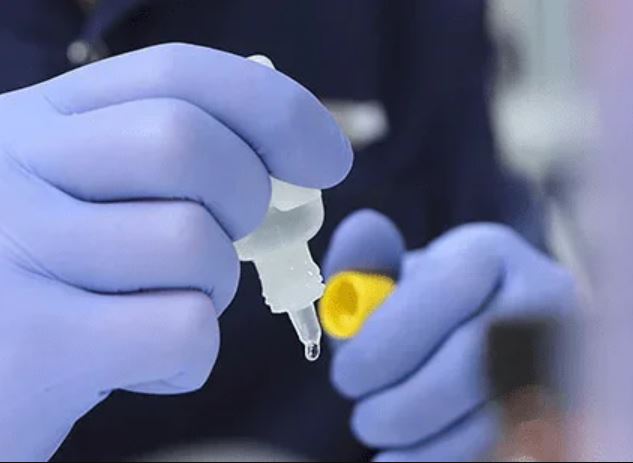
The adhesive bottle is the smallest product on the restorative tray, and probably the one on which the lifespan of a bonded restoration depends most. This article describes the product itself: how adhesive systems are classified, what they contain and why, which properties govern their behaviour over time, how to choose among the products available, and how to store and handle them without losing effectiveness or exposing the team. The chairside choice of adhesive strategy and the step-by-step application protocol are covered in a separate article on enamel-dentin bonding, to which this one refers rather than repeating it[2][3].
1 Definition and classification of adhesive systems
1.1 What an adhesive system is
A dental adhesive system is a set of resin solutions, acidic or not, that prepares enamel and dentin, infiltrates their porosities and then polymerises to bond a resin-based restorative material to the tooth. The principle rests first on micromechanical retention: the acid creates microporosities in enamel and demineralises superficial dentin, the resin infiltrates these spaces and forms, in dentin, a hybrid layer combining collagen and polymer, described by Nakabayashi in 1982[10]. Some monomers add a chemical bond to the calcium of hydroxyapatite, which profoundly changes the durability of the interface.
The difficulty lies in the heterogeneity of the two substrates. Enamel is highly mineralised and dry, which makes it a reliable bonding substrate; dentin is wet, rich in collagen and crossed by fluid-filled tubules. The same product must therefore be hydrophilic enough to wet dentin and, once polymerised, hydrophobic enough to resist water. The whole history of adhesives is the history of this compromise[7].
1.2 The current classification
The reference classification, proposed by Van Meerbeek, distinguishes systems by how they treat the smear layer and by the number of clinical steps[1][2]. Etch-and-rinse systems remove the smear layer with a rinsed phosphoric acid; self-etch systems dissolve and incorporate it without rinsing; universal adhesives, more recent, are one-step self-etch adhesives designed to be used with either strategy.
| Family | Steps and bottles | Distinctive feature |
|---|---|---|
| Etch-and-rinse, three steps | Phosphoric acid, hydrophilic primer in solvent, solvent-free hydrophobic adhesive resin | Historical benchmark for durability; sensitive to dentin moisture |
| Etch-and-rinse, two steps | Phosphoric acid, then primer and adhesive combined | Simpler; more hydrophilic layer, less durable |
| Self-etch, two steps | Acidic primer, then hydrophobic adhesive resin | Very good clinical results for mild 10-MDP formulations[8] |
| Self-etch, one step | Acidic, hydrophilic and hydrophobic monomers, water and solvent in one bottle | Maximum simplicity; permeable layer after polymerisation[7] |
| Universal (multi-mode) | One bottle, used alone, after selective enamel etching or after total etching | Often a phosphate monomer; sometimes built-in silane |
Self-adhesive resin cements and so-called self-adhesive flowable composites incorporate the adhesive function into the material itself. They are not adhesive systems in the strict sense and their bonding remains inferior to that of a separately applied adhesive; they belong to the articles dedicated to those materials[2].
1.3 Why drop the "generation" vocabulary
Numbering adhesives by generation, from fourth to eighth, comes from marketing. It is not standardised, varies from one manufacturer to another and says nothing about the chemistry of the product or its clinical results. A "seventh-generation" adhesive is not superior to a "fourth-generation" system; for durability, the reverse is often true. Reasoning in families and protocols makes it possible to compare products that are genuinely comparable[1][2].
Key point
Choose an adhesive family and a protocol, not a generation number or a brand name. Two products of the same family, used with the same protocol, are far closer to each other than two products of the same "generation"[2].
2 Composition: the role of each component
An adhesive combines etching agents, functional and cross-linking monomers, one or more solvents, a photoinitiator system and, depending on the product, fillers, a silane and additives. Van Landuyt's review, which analysed the declared composition of dozens of products, shows that each component has a precise role and a corresponding handling constraint[3].
2.1 Etching agents and acidic monomers
In etch-and-rinse systems, the acid is separate: 30 to 40% phosphoric acid, presented as a coloured gel thickened with silica, which dissolves enamel crystals and demineralises superficial dentin. In self-etch systems, this role is played by acidic monomers, phosphoric or carboxylic esters of methacrylates, which demineralise and infiltrate simultaneously. This simultaneity is the main advantage of self-etch adhesives: the resin in principle reaches the full depth of demineralisation, which limits the bare collagen left beneath the hybrid layer[3][6].
2.2 Functional monomers with chemical bonding
10-MDP, 10-methacryloyloxydecyl dihydrogen phosphate, is the best-documented functional monomer. It forms stable, poorly soluble salts with the calcium of hydroxyapatite, organised in nano-layers described by Yoshida and colleagues[4]. This chemical bond largely explains the durability of the mild self-etch adhesives that contain it. Other functional monomers exist, such as 4-META or phenyl-P, with a less stable bond to calcium.
The word "MDP" on a label does not, however, guarantee equivalent performance: monomer purity varies with manufacturers' synthesis processes, and impurities reduce nano-layer formation and bond strength[5]. This is one reason why the results of one product do not automatically transfer to another of apparently identical composition.
10-MDP
Chemical bond to calcium, stable nano-layers; reference monomer for durability, with purity varying by manufacturer[4][5].
HEMA
Improves wetting of moist dentin, but absorbs water, promotes hydrolysis and is a major allergen[3][12].
Bis-GMA, UDMA, TEGDMA, Bis-EMA
Hydrophobic cross-linking monomers that give the polymerised film its strength[3].
Solvents
Water, ethanol, acetone: carry the monomers and must then be evaporated before polymerisation[3].
Photoinitiators
Camphorquinone and amine around 470 nm; alternative initiators around 400 nm requiring a lamp that emits in the violet range[3].
Fillers and silane
Nanometric silica for a thicker film; silane in some universals intended for glass ceramics[3].
2.3 Hydrophilic and cross-linking monomers
HEMA, 2-hydroxyethyl methacrylate, improves wettability and penetration of the product into moist dentin, and limits phase separation between water and hydrophobic monomers in single bottles. Its downside is twofold: it remains hydrophilic once polymerised, which promotes water uptake and hydrolysis, and it is one of the main contact allergens in the dental practice. The hydrophobic cross-linking monomers, Bis-GMA, UDMA, TEGDMA and Bis-EMA, build, by contrast, the strong network of the film. The ratio between the two families sets the balance between immediate wettability and long-term stability[3][7].
2.4 Solvents
Water is essential to self-etch adhesives, because it allows ionisation of the acidic monomers; without water, there is no etching. Ethanol and acetone facilitate monomer penetration and displace residual water from dentin. Acetone, which is highly volatile, requires the bottle to be closed immediately after each dispensing. In all cases, the solvent must be evaporated before polymerisation: residual solvent leaves a porous, weak layer and contributes to post-operative sensitivity[3][7].
2.5 Photoinitiators
Camphorquinone combined with a tertiary amine absorbs around 470 nm, making it compatible with all blue LED lamps. Some products use alternative initiators, of the TPO type or germanium derivatives, which absorb around 400 nm. These initiators are only effectively activated by a lamp that also emits in the violet range, known as polywave. Combining such an adhesive with a single-peak blue lamp gives incomplete polymerisation, with no visible sign at the time of treatment[3][14].
2.6 Fillers, silane and additives
Some adhesives contain nanometric silica fillers, which give a thicker, stronger film at the cost of higher viscosity. Several universals include a silane intended for bonding to glass ceramics; its effectiveness in an acidic, aqueous medium decreases with storage time, through hydrolysis and condensation of the silane in the bottle. Other additives are advertised, fluoride, chlorhexidine or glutaraldehyde for desensitisation, without a consistently demonstrated clinical effect[3][9].
3 Acidity, hybrid layer and hydrophilicity
3.1 The acidity of self-etch adhesives
Self-etch adhesives are classified by their pH[6]. This acidity determines the depth of interaction with dentin, the quality of enamel etching and the possibility of a chemical bond.
| Category | pH | Practical consequence |
|---|---|---|
| Ultra-mild | Above 2.5 | Interaction of a few hundred nanometres; very weak enamel etching |
| Mild | About 2 | Hydroxyapatite preserved around collagen, chemical bonding of 10-MDP possible |
| Intermediately strong | About 1.5 | Intermediate profile between mild and strong |
| Strong | 1 or below | Demineralisation close to phosphoric acid etching; reduced chemical bonding |
Mild self-etch adhesives achieve the best results on dentin, because they leave enough hydroxyapatite for 10-MDP to bond to. Their etching of unprepared enamel, however, is weak, which justifies selective enamel etching with phosphoric acid, described in the article on enamel-dentin bonding[6][8].
3.2 Hybrid layer thickness
After etch-and-rinse, the hybrid layer measures about 3 to 5 µm; with a mild self-etch adhesive, it is less than 1 µm. This difference was long interpreted as an advantage of etch-and-rinse systems. It is not: thickness does not predict durability. A thin layer, fully infiltrated and chemically bonded, degrades less than a thick layer whose base contains poorly infiltrated demineralised collagen[6][10].
3.3 Hydrophilicity and membrane behaviour
One-step adhesives, rich in water and HEMA, remain permeable after polymerisation. Tay and Pashley showed that they behave like semi-permeable membranes, allowing water to pass from dentin to the interface with the composite[7]. This permeability promotes hydrolysis of the resin and the formation of water droplets at the interface. It explains why an additional hydrophobic layer, or at least a double application with careful solvent evaporation, improves the behaviour of these products.
3.4 Degradation mechanisms over time
The adhesive interface degrades through two mutually reinforcing pathways. The resin, especially its hydrophilic fraction, hydrolyses; exposed and poorly protected collagen is degraded by endogenous dentin enzymes, matrix metalloproteinases and cathepsins, activated in particular by acid etching. The bond to enamel, which contains no collagen, is by far the most durable. Hence the constant clinical principle: preserve peripheral enamel wherever possible[1][9].
4 Interface durability: what the evidence shows
4.1 Non-carious cervical lesions as a clinical model
Non-carious cervical lesions are the reference model for testing adhesives clinically: they have no mechanical retention, their margin combines enamel and often sclerotic dentin, and loss of the restoration directly reflects bonding failure. The systematic review by Peumans and colleagues, which compiles trials on this model, shows that the best long-term retention rates are obtained with three-step etch-and-rinse systems and two-step mild self-etch adhesives containing 10-MDP[8]. Universals applied after selective enamel etching come close, with an even shorter follow-up.
4.2 Immediate bond strength and clinical behaviour
Bond strength values measured in the laboratory a few hours after bonding, often highlighted in commercial literature, do not predict long-term clinical retention. Artificial ageing protocols (water storage, thermocycling) bring laboratory results a little closer to reality without replacing it. A recent product, even excellent in vitro, has not yet proved its durability until it has been followed for several years in the mouth[1][8].
4.3 Enzyme inhibitors: a still-debated avenue
Applying 2% chlorhexidine to etched dentin, or incorporating enzyme inhibitors into the adhesive, has been proposed to slow collagen degradation. The effects observed in the laboratory are real, but the meta-analysis by Montagner and colleagues relies essentially on in vitro data, and the long-term clinical benefit is not established[9]. This is a research avenue, not a step to be added routinely to the protocol.
Level of evidence
The ranking of families rests on clinical trials and systematic reviews of moderate quality, mainly on non-carious cervical lesions. The benefit of additives (chlorhexidine, desensitisers, fluoride) and the long-term durability of the newest universals remain insufficiently documented[8][9].
5 Compatibilities and incompatibilities
5.1 Simplified adhesives and chemically cured materials
The acidic monomers of simplified adhesives, two-step etch-and-rinse and one-step self-etch, neutralise the tertiary amines that initiate the setting of self-cure and dual-cure composites. Added to this is the permeability of the adhesive layer, which lets water accumulate at the interface. Suh and colleagues described this dual incompatibility mechanism[11]. The clinical result is debonding of a core build-up composite, a post, or an indirect restoration luted with a dual-cure cement, where light does not reach. The remedy is to use the dual-cure activator provided by the manufacturer or a system declared compatible with chemical curing.
5.2 Eugenol, hypochlorite and peroxides
Residual eugenol, from temporary cements or some root canal sealers, inhibits the radical polymerisation of adhesives. Residual sodium hypochlorite and hydrogen peroxide, after endodontic treatment or bleaching, leave oxidising radicals that disrupt polymerisation in the same way. In these situations, the surface must be cleaned or refreshed, or bonding deferred, as detailed in the article on restoring endodontically treated teeth[2][14].
5.3 Curing light and photoinitiator
Compatibility between the practice's curing light and the adhesive's initiator is a question of spectrum as much as power. Before adopting a new adhesive, check the required spectrum in the instructions and compare it with that of the available lamp. A single-peak blue lamp remains compatible with camphorquinone-based products, which still make up the majority of the market[3][14].
5.4 Film thickness and indirect restorations
The film of an unfilled adhesive measures in the order of 5 to 20 µm, more for a filled adhesive or one poorly air-thinned. Under an indirect restoration, a thick film light-cured before insertion can prevent complete seating of the piece. Luting choices for fixed restorations, including whether to cure the adhesive before insertion, are covered in the article on cementation and bonding in fixed prosthodontics[2][14].
A dual-cure composite core debonds a few weeks after placement, although coronal bonding seemed perfect at the chair[11].
Check compatibility between the adhesive used and the chemical curing of the composite: with a one-step self-etch adhesive, add the same manufacturer's dual-cure activator or switch to a system declared compatible with self-cure materials[11].
6 Adhesives available in Algeria: product profiles and choice
The families described above are found in practice in the products offered by Algerian distributors. This section reviews thirteen adhesives identified in distributor catalogues in September 2026[28], grouped by family, then offers a decision grid by clinical situation. Composition and protocol data come from manufacturers' instructions and technical documents; they do not constitute a clinical comparison between products, which does not exist for most of them. Products are presented on an equal footing, without commercial ranking[14].
6.1 Overview of the products
The table below places each product in its family and summarises the three characteristics that most determine its use: the functional monomer, the solvent and compatibility with chemically cured materials. "Not published" means the information does not appear in the manufacturer documentation consulted, not that it is absent from the product[14].
| Product (manufacturer) | Family | Functional monomer | Solvent | Chemical curing |
|---|---|---|---|---|
| Stae (SDI) | Etch-and-rinse, 2 steps | Not published | Acetone and water | Not stated |
| EsBond (Spident) | Etch-and-rinse, 2 steps | Not published | Acetone | Not stated |
| Te-Econom Bond (Ivoclar) | Etch-and-rinse, 2 steps | Not published (contains HEMA) | Alcohol | Contraindicated |
| GLUMA 2Bond (Kulzer) | Etch-and-rinse, 2 steps | Not published (glutaraldehyde) | Not published | Not stated |
| Bond 2.1 (Maquira) | Etch-and-rinse, 2 steps | Not published | Ethanol | Not stated |
| Solobond M (VOCO) | Etch-and-rinse, 2 steps | Not published | Not published | Light-cured materials only |
| OliEtch BOND (Olident) | Self-etch, 1 step | Not published | Solvent-free (manufacturer) | Light-cured materials only |
| Single Bond Universal (3M, Solventum) | Universal | 10-MDP (contains HEMA, silane) | Ethanol and water | With dual-cure activator |
| Clearfil Universal Bond Quick (Kuraray Noritake) | Universal | 10-MDP (contains HEMA, silane) | Ethanol and water | With dual-cure activator |
| Iperbond Max (Itena) | Universal | 10-MDP and 4-META | Not published | Dual-cure cements accepted (manufacturer) |
| GLUMA Bond Universal (Kulzer) | Universal | 10-MDP and 4-META (no HEMA or silane) | Acetone and water | No activator needed (manufacturer) |
| Zipbond (SDI) | Universal | 10-MDP (HEMA-free) | Not published | Not stated |
| G2-BOND Universal (GC) | Two-bottle universal | 10-MDP, 4-MET, MDTP (HEMA-free) | Water and acetone (primer); none (bond) | Light curing required |
6.2 Two-step etch-and-rinse
This is the most widely represented family on the market and the oldest of the six present here, often called "fifth generation". All these products require prior phosphoric acid etching, rinsing and dentin left moist; their layer, combining primer and adhesive, is more hydrophilic and less durable than that of a three-step system[1][8]. Their appeal lies in their cost, their excellent bond to etched enamel and handling familiar to most practitioners. Their main requirement is managing dentin moisture, on which a large share of post-operative sensitivity depends[7].
Stae — SDI
Acetone and water · Bis-GMA-free · fluoride-releasing
Manufacturer's protocol: 37% phosphoric acid for 20 seconds, rinse leaving dentin moist, apply to saturation, gentle air for 2 seconds, light-cure for 10 seconds. The water in the solvent rewets dentin that has been over-dried, making the product slightly more forgiving; the acetone, however, requires closing the bottle immediately. Ceramic repairs possible after a separate silane[15].
EsBond — Spident
Acetone · wet bonding
Stated protocol: etch 15 seconds, rinse 10 seconds, remove excess water without over-drying, two to three coats for 15 seconds, air for 5 seconds, light-cure 10 to 20 seconds. A typical acetone-based adhesive: very good penetration on moist dentin, high sensitivity to evaporation from the bottle. For the luting of indirect pieces advertised by the distributor, compatibility with a dual-cure cement is not documented[27].
Te-Econom Bond — Ivoclar
HEMA · methacrylates · fillers · alcohol solution
Used with Eco-Etch gel (37% phosphoric acid): 30 seconds on enamel, 15 seconds on dentin. The adhesive is brushed in for 10 seconds, the solvent evaporated with gentle air, then light-cured for 20 seconds. Storage between 2 and 28 °C. The instructions explicitly contraindicate it with self-curing composites: it must not be used under a chemically cured core build-up[16].
GLUMA 2Bond — Kulzer
Nanofillers · glutaraldehyde (desensitising agent)
After etching with GLUMA Etch gel and rinsing, a single coat is sufficient according to the manufacturer, without prolonged rubbing, followed by air drying. The built-in glutaraldehyde targets post-operative sensitivity; the clinical benefit of integrated desensitisers remains inconsistent in the literature. Direct and indirect indications, with no published detail on chemical curing[17][9].
Bond 2.1 — Maquira
Ethanol · primer and adhesive in one bottle
Single-component ethanol-based adhesive, to be applied in several coats after acid etching according to the manufacturer. Ethanol is less volatile than acetone, which makes the bottle somewhat less sensitive to evaporation. The manufacturer also cites luting of posts and prostheses with a resin cement; compatibility with chemical curing is not specified in the documents consulted[26].
Solobond M — VOCO
Single-component, light-cured
Separate etching is mandatory (Vococid gel supplied in the kit), followed by a single application; the distributor indicates a contact time of about 30 seconds and light curing of about 20 seconds. The manufacturer restricts it to direct restorations with light-cured materials. Advertised bond strength of 28 to 32 MPa, a laboratory value that says nothing about clinical durability[25][28].
6.3 One-step self-etch
OliEtch BOND — Olident
"Seventh generation" · solvent-free according to the manufacturer
Etching, conditioning and bonding in a single coat: rub for 30 seconds on moist enamel and dentin, air for 10 seconds, light-cure for 10 seconds. The manufacturer publishes neither the pH nor the functional monomer. Restricted to light-cured composites[22].
This family is the simplest but also the one whose layer remains most permeable and whose durability is lowest in clinical trials[7][8]. With no published pH, it is impossible to know whether unprepared enamel will be etched properly; as a precaution, selective enamel etching with phosphoric acid before application remains reasonable, provided the instructions do not advise against it[6]. This type of product has its place in small cavities, in children or when speed matters most, rather than in large posterior restorations.
6.4 Universal adhesives
Universals differ from one another mainly on three points: the presence or absence of HEMA, acidity, and compatibility with chemically cured materials. Used after selective enamel etching, they approach the best families, with shorter clinical follow-up[8][2].
Single Bond Universal — 3M (Solventum)
10-MDP · Vitrebond copolymer · HEMA · silane · pH 2.7
Rub for 20 seconds, air-dry, light-cure for 10 seconds. Its pH of 2.7 places it among the ultra-mild adhesives: selective enamel etching is particularly useful. The DCA dual-cure activator is needed with self- or dual-cure materials. Storage between 2 and 25 °C, two-year shelf life. The manufacturer now also markets a newer version, Scotchbond Universal Plus[19].
Clearfil Universal Bond Quick — Kuraray Noritake
10-MDP · amide monomers · HEMA · silane · fluoride · ethanol and water
Apply with rubbing, no waiting time, air-dry 5 seconds, light-cure 10 seconds; in total- or selective-etch mode, phosphoric acid for 10 seconds. Film of 5 to 10 µm, favourable under indirect pieces. DC Activator required with dual-cure materials, except certain products from the same manufacturer[20].
Iperbond Max — Itena
10-MDP and 4-META · pH between 2 and 2.5
Mild self-etch: 20 seconds of contact, air-dry, light-cure 10 seconds; enamel etching recommended by the manufacturer. No refrigeration needed. The manufacturer accepts light- or dual-cure cements for indirect pieces, without stating in the documents consulted whether an activator is required; check the instructions before a dual-cure luting[24].
GLUMA Bond Universal — Kulzer
10-MDP and 4-META · no HEMA or silane · acetone and water · pH 1.6 to 1.8
Intermediate acidity, hence better enamel etching than most universals, but chemical bonding of 10-MDP less favoured than with a mild product. The manufacturer claims compatibility with all composites whatever their curing mode, without an activator. The absence of silane requires a separate silane for glass ceramics. Acetone solvent: close the bottle immediately[18].
Zipbond — SDI
10-MDP and a proprietary adhesive monomer · HEMA-free · fillers · fluoride
Usable in self-etch, selective-etch or total-etch mode. Film of about 8 µm. The absence of HEMA aims at a less hydrophilic layer and a lower allergy risk. The solvent, pH and application times do not appear in the public documents consulted; refer to the instructions supplied with the product[23].
6.5 Two-bottle universal
G2-BOND Universal — GC
Primer: 4-MET, 10-MDP, MDTP, water, acetone, pH about 1.5 · Bond: hydrophobic, no HEMA or solvent
Primer applied for 10 seconds, dried for 5 seconds at maximum pressure, then a hydrophobic bond coat, spread with gentle air and light-cured for 10 seconds. Thick film of about 35 µm, to be taken into account under an indirect piece. The manufacturer restricts use to light-cured materials or those whose light-curing component is activated. Silane remains separate for ceramics[21].
Through its structure, acidic primer followed by a solvent-free hydrophobic layer, this product follows the principle of two-step self-etch adhesives, the best clinically documented family[8]. This kinship is a theoretical argument: the clinical follow-up specific to this product remains shorter than that of the historical systems of the family.
6.6 Decision grid by clinical situation
The following grid starts from the clinical situation and designates, among the thirteen products available in Algeria, a first choice, an alternative and products to avoid. It does not rank brands against each other: it applies to the listed products the principles established above (family, acidity, presence of HEMA, compatibility with chemical curing, silane). Within the same family, mastery of the protocol matters more than the brand[8][14][28].
| Clinical situation | First choice | Alternative | Avoid or take care |
|---|---|---|---|
| Routine posterior composite, medium cavity | Mild 10-MDP universal with selective enamel etching: Iperbond Max, Clearfil Universal Bond Quick, Single Bond Universal[20][24][19] | G2-BOND Universal; Zipbond[21][23] | All-in-one applied as a single thin coat without enamel etching[7] |
| Deep cavity, tooth sensitive before treatment | G2-BOND Universal (solvent-free hydrophobic layer) or mild universal in selective-etch mode, no acid on dentin[21][6] | Iperbond Max, Clearfil Universal Bond Quick[24][20] | Prolonged total etching and desiccated dentin with an etch-and-rinse adhesive[7] |
| Non-carious cervical lesion, sclerotic dentin | Refresh the dentin, selective enamel etching, then G2-BOND Universal or a mild 10-MDP universal[8][21] | Iperbond Max, Clearfil Universal Bond Quick, Single Bond Universal[24][20][19] | OliEtch BOND alone on shiny, unprepared sclerotic dentin[22][8] |
| Large area of unprepared enamel: direct veneer, orthodontic bracket, sealant | Total enamel etching then an etch-and-rinse adhesive: Stae, Te-Econom Bond, EsBond, Bond 2.1, GLUMA 2Bond, Solobond M[15][16] | Any universal used in total-etch mode[2] | Self-etch without phosphoric acid on uncut enamel[6] |
| Dual- or self-cure core build-up, fibre post | Single Bond Universal with DCA activator, Clearfil Universal Bond Quick with DC Activator[19][20] | GLUMA Bond Universal, declared compatible without activator by the manufacturer[18] | Te-Econom Bond (contraindicated); OliEtch BOND, Solobond M and G2-BOND Universal (restricted to light-cured materials)[16][22][25][21] |
| Immediate dentin sealing before impression for a bonded piece | G2-BOND Universal, indicated by the manufacturer for this use[21] | Clearfil Universal Bond Quick, whose 5 to 10 µm film barely hinders seating[20] | Uncontrolled thick film under a piece with little luting space[2] |
| Bonding a zirconia or metal piece | 10-MDP universal as part of the prosthetic bonding protocol: Clearfil Universal Bond Quick, Single Bond Universal, Iperbond Max, Zipbond, GLUMA Bond Universal[20][19][18] | G2-BOND Universal primer (10-MDP and MDTP for precious metals)[21] | Etch-and-rinse adhesives with no declared phosphate monomer[14] |
| Bonding or repair on glass ceramic | Separate silane, then any adhesive on the list[2][3] | Built-in silane of Single Bond Universal or Clearfil Universal Bond Quick, only with a recently opened bottle[19][20] | GLUMA Bond Universal and G2-BOND Universal without a separate silane: they contain none[18][21] |
| Intraoral composite repair | Roughening, silane, then a universal: Single Bond Universal, Clearfil Universal Bond Quick, GLUMA Bond Universal[19][20][18] | G2-BOND Universal after silane[21] | New composite on an old surface that has merely been cleaned[14] |
| Difficult isolation, poorly controlled field | Short-application universal with no waiting time: Clearfil Universal Bond Quick[20] | Stae, whose water content better tolerates slightly over-dried dentin[15] | Acetone-based adhesives on desiccated dentin; OliEtch BOND in a large cavity[7] |
| Child, small cavity, limited chair time | Clearfil Universal Bond Quick[20] | OliEtch BOND, with selective enamel etching if the instructions allow[22][6] | Multi-step protocols unsuited to the child's cooperation[14] |
| Known or suspected HEMA allergy (patient or assistant) | HEMA-free products: Zipbond, GLUMA Bond Universal, G2-BOND Universal[23][18][21] | Allergist's opinion to identify the monomer involved[12] | Te-Econom Bond, Single Bond Universal, Clearfil Universal Bond Quick (contain HEMA)[16][19][20] |
| Practice in a hot region, bottle used slowly | Products with documented storage without refrigeration: Iperbond Max, Single Bond Universal (2 to 25 °C), Te-Econom Bond (2 to 28 °C)[24][19][16] | Small bottles renewed often[14] | Large bottles of acetone-based adhesives open for months: Stae, EsBond, GLUMA Bond Universal, G2-BOND primer[3][14] |
| Tight budget, routine practice | Two-step etch-and-rinse with rigorous wet bonding: Te-Econom Bond, Bond 2.1, EsBond, Stae[16][26][27][15] | A single mild universal for all indications, avoiding the purchase of several products[8] | Saving money by decanting or using an expired bottle[14] |
Read the other way round, the same information gives the profile of each product: what it does well, its main limitation and where it is most useful. This table helps decide which bottle to keep in the practice rather than choosing case by case[14][28].
| Product | Strength | Main limitation | Best use |
|---|---|---|---|
| Stae | Water and acetone, tolerates slightly dry dentin, Bis-GMA-free[15] | Etch-and-rinse: more hydrophilic layer, bottle sensitive to evaporation | Large enamel areas, economical practice |
| EsBond | Good penetration in wet bonding[27] | Acetone, compatibility with chemical curing not documented | Light-cured direct restorations |
| Te-Econom Bond | Simple, documented protocol, storage up to 28 °C[16] | Contraindicated with self-curing composites | Direct composites, tight budget |
| GLUMA 2Bond | Single coat, built-in glutaraldehyde[17] | Inconsistent clinical benefit of the built-in desensitiser[9] | Direct restorations in sensitivity-prone patients |
| Bond 2.1 | Ethanol, less volatile than acetone[26] | Several coats needed, limited public data | Economical routine practice |
| Solobond M | Single application, etching gel supplied[25] | Restricted to light-cured materials | Direct restorations, all classes |
| OliEtch BOND | One coat, no rinsing, no evaporation claimed[22] | pH and monomer not published, least durable family[8] | Small cavities, children |
| Single Bond Universal | 10-MDP, silane, dual-cure activator available[19] | pH 2.7: selective enamel etching essential, contains HEMA | The practice's all-purpose adhesive |
| Clearfil Universal Bond Quick | No waiting time, 5 to 10 µm film, dual-cure activator[20] | Contains HEMA | Versatility, difficult isolation, indirect bonding |
| Iperbond Max | 10-MDP and 4-META, mild pH, no refrigeration[24] | Solvent and need for an activator not published | Routine posterior composites |
| GLUMA Bond Universal | HEMA-free, claimed compatibility with all curing modes[18] | pH 1.6 to 1.8, no silane, acetone solvent | Core build-ups and mixed luting, HEMA allergy |
| Zipbond | 10-MDP, HEMA-free, thin film[23] | Protocol and solvent not published online | Direct restorations, HEMA allergy |
| G2-BOND Universal | Hydrophobic layer without HEMA or solvent, two-step principle[21] | Two bottles, 35 µm film, light curing required | Deep cavities, cervical lesions, immediate dentin sealing |
Recommended minimal kit
To cover almost every situation without multiplying bottles, a practice can stock a mild 10-MDP universal with its dual-cure activator, a phosphoric acid gel for selective enamel etching and a separate silane. An economical etch-and-rinse adhesive remains useful as a complement for large enamel surfaces. Within these families, the choice of brand is a matter of availability and habit[8][14].
Selection pitfall
Using a two-step etch-and-rinse or an all-in-one adhesive under a chemically cured core build-up, without checking the instructions, risks debonding of the core. Te-Econom Bond is explicitly contraindicated in this situation by its manufacturer[11][16].
6.7 Bottle, unit dose and purchasing criteria
All the products identified are sold in 4 to 6 mL bottles. The multi-dose bottle is economical, but the solvent evaporates at each opening, especially with acetone-based adhesives (Stae, EsBond, GLUMA Bond Universal, G2-BOND primer); a small bottle used up in a few months is better than a large bottle opened a year ago[3][14]. When purchasing, the criteria to check in the instructions are the family, the functional monomer, the solvent, the initiator spectrum, compatibility with chemical curing, the presence of a silane and the storage temperature. Rather than multiplying products, a practice benefits from choosing a mild 10-MDP universal for routine work, supplemented if necessary by the same manufacturer's dual-cure activator[5][8].
Management pitfall
Changing adhesive after every failure or post-operative sensitivity prevents identification of the protocol error, which is by far the most common cause. Review the protocol before changing product[8].
7 Storage and signs of deterioration
7.1 Temperature and solvent evaporation
Adhesives are sensitive to heat, which accelerates solvent evaporation and degradation of monomers and silane. Many products are stored between 2 and 25 °C; some require refrigeration. A refrigerated adhesive must return to room temperature before use to recover its normal viscosity. The bottle is closed immediately after each dispensing, never left open during the appointment[14].
7.2 Protection from light
Ambient light and the operating light are enough to initiate polymerisation within a few minutes. The adhesive is therefore dispensed into an opaque or covered well, away from the operating light, and applied quickly. A drop dispensed at the start of the preparation and used ten minutes later no longer has the expected properties[14].
On receipt: check the expiry date and the consistency of the batch, write the opening date on the bottle[14].
In storage: respect the temperature in the instructions, away from windows, the autoclave and heat sources[14].
When dispensing: product back at room temperature, opaque well, bottle closed immediately[14].
7.3 Recognising a deteriorated adhesive
An adhesive that has become viscous or cloudy, shows phase separation or has lost the characteristic odour of its solvent must no longer be used. These signs reflect solvent evaporation or partial polymerisation in the bottle; the product no longer infiltrates dentin correctly. Decanting into another bottle, sometimes done to save product, must be avoided: it accelerates evaporation, exposes the product to light and breaks batch traceability[3][14].
7.4 Algerian context: supply and heat
The six adhesive families are represented in the range offered by Algerian distributors, with thirteen products identified in their catalogues in September 2026 and detailed in section 6[28]. Prices, regularity of supply and lead times have not been verified and vary over time; no local adhesive manufacturer has been identified. This situation argues for mastering a protocol with a durably available family rather than frequently changing product according to what arrives.
Two risks specific to this context deserve particular attention. The first concerns the supply chain: products may stay in stock for a long time and be exposed to high temperatures during transport, which requires checking the expiry date and consistency on purchase and avoiding buying large quantities of an adhesive close to expiry. The second concerns the practice itself: in regions with strong summer heat, particularly in the South, bottles are kept in the refrigerator when the instructions allow it, or failing that in the coolest area of the practice[14].
8 Safety of the team and the patient
8.1 Methacrylate allergy in staff
Unpolymerised methacrylates, particularly HEMA and acidic monomers, are a major cause of allergic contact dermatitis and fingertip eczema in dentists and dental assistants[12]. Latex and thin nitrile gloves protect for only a few minutes against penetration of these small monomers[13]. Prevention relies on avoiding all skin contact: do not handle contaminated brushes, wells or capsules with bare hands, change gloves as soon as they are contaminated, and do not reuse a glove after touching the adhesive. Once established, sensitisation is permanent and can force a career change.
8.2 The patient
Allergic reaction to methacrylates in patients is rare but documented. The medical history looks for a known acrylate allergy and, more practically, a reaction to artificial nails or gel manicures, which are now a frequent source of sensitisation. If there is a history, an allergist's opinion precedes resin-based restorations[12].
8.3 Eyes and waste
Protective glasses are required for the patient and the team because of splashes of phosphoric acid and monomer. Unpolymerised adhesive residues are light-cured before disposal; empty bottles and unit doses follow the healthcare waste stream according to local regulations[14].
8.4 Clinical uses: cross-references
This article describes the product; its clinical uses are covered in dedicated articles. The choice of adhesive strategy, selective enamel etching and moisture management belong to the article on enamel-dentin bonding; bonding-related sensitivity to the article on post-operative sensitivity after adhesive restorations; sclerotic dentin to the article on non-carious cervical lesions; composite repair to the article on finishing, polishing and repair; bonding of posts and core build-ups to the article on restoring endodontically treated teeth; combination with glass ionomer to the article on the sandwich technique; bonding to ceramics, zirconia and metal to the article on cementation and bonding in fixed prosthodontics[2].
Practical summary
- 1
Think in families and protocols, never in "generations" or brand names[1][2].
- 2
Favour a mild 10-MDP self-etch adhesive or a universal combined with selective enamel etching for direct restorations[4][8].
- 3
Apply two coats and carefully evaporate the solvent with one-step adhesives[7].
- 4
Check compatibility with chemically cured materials and use the dual-cure activator when needed[11].
- 5
Make sure the practice's curing light covers the spectrum of the adhesive's initiator[3][14].
- 6
Prefer a separate silane to a built-in silane for bonding to glass ceramics[2][3].
- 7
Close the bottle immediately, store it cool and discard any product that is viscous, cloudy or has lost its solvent odour[3][14].
- 8
Change gloves as soon as they are contaminated with adhesive[13].
Frequently asked questions
Does a universal adhesive replace all other systems?→
No. It simplifies stock and allows several strategies with a single bottle, but the best long-term clinical results remain those of three-step etch-and-rinse and two-step mild self-etch systems. Universals come close when combined with selective enamel etching, with shorter follow-up[8].
Does "contains MDP" guarantee a good bond?→
It indicates a possible chemical bond to calcium, but monomer purity and the rest of the formulation vary between manufacturers. The results of one MDP-containing product do not automatically transfer to another[5].
Should adhesives be stored in the refrigerator?→
Only if the instructions require or allow it. In that case, the product must return to room temperature before use. In hot regions, this is often the best option when permitted by the manufacturer[14].
Can an adhesive be used past its expiry date if it looks normal?→
No. Solvent evaporation and hydrolysis of monomers or silane are not always visible, and a failing bond only shows after several weeks or months. The cost of a bottle bears no comparison with that of a restoration to be redone[3].
Why does a core build-up composite debond with some adhesives?→
The acidic monomers of simplified adhesives neutralise the amines that initiate the chemical setting of the composite, and the permeable adhesive layer lets water accumulate at the interface. The manufacturer's dual-cure activator or a system declared compatible prevents this debonding[11].
Do desensitising additives or chlorhexidine improve the result?→
Their effects are mainly demonstrated in the laboratory; the long-term clinical benefit is not consistently established. They do not replace a rigorous application and solvent evaporation protocol[9].
References
- Van Meerbeek, B., De Munck, J., Yoshida, Y., et al. (2003). Adhesion to enamel and dentin: current status and future challenges. Operative Dentistry, 28(3), 215–235.Classic
- Van Meerbeek, B., Yoshihara, K., Van Landuyt, K., Yoshida, Y., & Peumans, M. (2020). From Buonocore's pioneering acid-etch technique to self-adhering restoratives. Journal of Adhesive Dentistry, 22(1), 7–34.Review
- Van Landuyt, K. L., Snauwaert, J., De Munck, J., et al. (2007). Systematic review of the chemical composition of contemporary dental adhesives. Biomaterials, 28(26), 3757–3785.Review
- Yoshida, Y., Yoshihara, K., Nagaoka, N., et al. (2012). Self-assembled nano-layering at the adhesive interface. Journal of Dental Research, 91(4), 376–381.Study
- Yoshihara, K., Nagaoka, N., Okihara, T., et al. (2015). Functional monomer impurity affects adhesive performance. Dental Materials, 31(12), 1493–1501.Study
- Van Meerbeek, B., Yoshihara, K., Yoshida, Y., et al. (2011). State of the art of self-etch adhesives. Dental Materials, 27(1), 17–28.Review
- Tay, F. R., & Pashley, D. H. (2003). Have dentin adhesives become too hydrophilic? Journal of the Canadian Dental Association, 69(11), 726–731.Review
- Peumans, M., De Munck, J., Mine, A., & Van Meerbeek, B. (2014). Clinical effectiveness of contemporary adhesives for the restoration of non-carious cervical lesions: a systematic review. Dental Materials, 30(10), 1089–1103.Systematic review
- Montagner, A. F., Sarkis-Onofre, R., Pereira-Cenci, T., & Cenci, M. S. (2014). MMP inhibitors on dentin stability: a systematic review and meta-analysis. Journal of Dental Research, 93(8), 733–743.Meta-analysis
- Nakabayashi, N., Kojima, K., & Masuhara, E. (1982). The promotion of adhesion by the infiltration of monomers into tooth substrates. Journal of Biomedical Materials Research, 16(3), 265–273.Founding classic
- Suh, B. I., Feng, L., Pashley, D. H., & Tay, F. R. (2003). Factors contributing to the incompatibility between simplified-step adhesives and chemically-cured or dual-cured composites. Part III. Journal of Adhesive Dentistry, 5(4), 267–282.Study
- Kanerva, L., Estlander, T., & Jolanki, R. (2000). Occupational allergic contact dermatitis and contact urticaria caused by acrylates in dental personnel. Contact Dermatitis.Study
- Andreasson, H., Boman, A., Johnsson, S., et al. (2003). On permeability of methyl methacrylate, 2-hydroxyethyl methacrylate and triethyleneglycol dimethacrylate through protective gloves in dentistry. European Journal of Oral Sciences, 111(6), 529–535.Study
- Instructions for use of the manufacturers cited in this article: storage conditions, compatibility with chemically cured materials, activation spectrum and safety data.Documentation
- SDI. Stae — Dentin/enamel single component total etch adhesive, product brochure.Manufacturer
- Ivoclar Vivadent. Te-Econom Plus, Te-Econom Flow, Te-Econom Bond, Eco-Etch, instructions for use.Manufacturer
- Kulzer. GLUMA 2Bond — Adhesive convenience, product sheet.Manufacturer
- Kulzer. GLUMA Bond Universal — Scientific Compendium.Manufacturer
- 3M. Single Bond Universal Adhesive — Frequently Asked Questions.Manufacturer
- Kuraray Noritake. Clearfil Universal Bond Quick — Technical Information.Manufacturer
- GC Europe. G2-BOND Universal — Comprehensive Guide.Manufacturer
- Olident. OliEtch BOND, product page and leaflet.Manufacturer
- SDI. Zipbond Universal, product page.Manufacturer
- Itena Clinical. Iperbond Max, product page.Manufacturer
- VOCO. Solobond M, product page.Manufacturer
- Maquira. Bond 2.1, product page.Manufacturer
- Spident. EsBond, product sheet published by a distributor.Manufacturer
- Online catalogues of dental supply distributors in Algeria, consulted in September 2026.Local market