
Pathophysiology of Dental Pain
Pain Mechanisms
Dental pain is mediated through the nerve fibers of the trigeminal nerve (V) and falls into three main categories:
- Acute nociceptive: direct stimulation of pulpal or periodontal nociceptors (deep caries, fractures, pericoronitis)
- Inflammatory: release of mediators (prostaglandins, bradykinins, substance P) amplifying pain — pulpitis, acute apical periodontitis
- Neuropathic: rare in routine dentistry; more common post-surgically or in trigeminal neuralgia
The Inflammatory Cascade — Target of Analgesics
NSAIDs act by blocking cyclo-oxygenases (COX), reducing prostaglandin synthesis responsible for nociceptor sensitization:
- Tissue injury → release of arachidonic acid
- COX-1 / COX-2 → prostaglandin synthesis → hyperalgesia
- COX inhibition by NSAIDs → reduced prostaglandins → analgesia + anti-inflammation
Pain Intensity Assessment
| NRS / VAS Score | Level | Recommended Treatment |
|---|---|---|
| 0 – 3 | Mild | Step I — Paracetamol or ibuprofen alone |
| 4 – 6 | Moderate | Reinforced Step I — Paracetamol + NSAID combination |
| 7 – 10 | Severe | Step II — Urgent dental care + multimodal analgesia |
Paracetamol — Step I
Mechanism & Pharmacokinetics
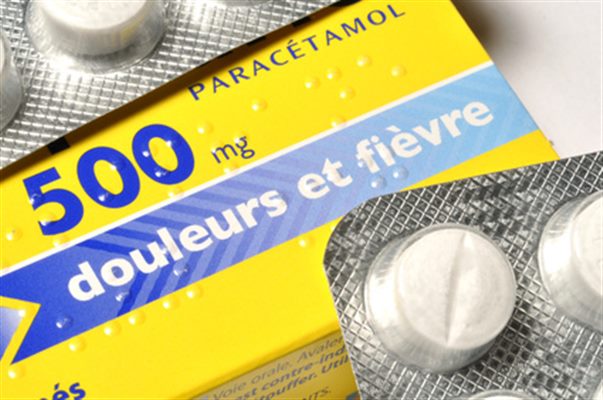
Paracetamol acts primarily centrally by inhibiting prostaglandin synthesis in the CNS (COX-3 inhibition). It has no clinically significant peripheral anti-inflammatory effect.
Pharmacokinetics
- Absorption: peak plasma concentration in 30–60 min orally
- Bioavailability: ~80% — Half-life: 2–3 hours
- Hepatic metabolism: at high doses → toxic metabolite NAPQI → hepatotoxicity
- Renal elimination
Adult Dosing
| Form | Unit Dose | Interval | Maximum/Day |
|---|---|---|---|
| Oral tablet | 500 mg – 1 g | Every 6 h | 4 g (3 g if at risk) |
| Effervescent tablet | 500 mg – 1 g | Every 6 h | 4 g |
| Suppository | 500 mg – 1 g | Every 6 h | 4 g |
Reduce to 2–3 g/day in the following cases:
- Body weight < 50 kg — Malnutrition / prolonged fasting
- Mild to moderate hepatic impairment
- Chronic alcoholism — Isoniazid therapy
Availability in Algeria
- Paracetamol Saidal 500 mg / 1 g (tablets)
- Doliprane 500 mg, 1 g — Efferalgan (effervescent) — Panadol 500 mg
- Paediatric: Doliprane syrup, Efferalgan syrup 2.4%
Advantages in Dentistry
- Excellent gastric safety — no gastric protection required
- Safe in pregnancy (all trimesters) — first-choice obstetric analgesic
- Compatible with breastfeeding
- No effect on platelet aggregation — no interference with haemostasis
- Safe for patients on warfarin (AVK)
- Can be combined with NSAIDs or opioids (synergistic effect)
Non-Steroidal Anti-Inflammatory Drugs (NSAIDs) — Step I
Common Mechanism
NSAIDs inhibit COX-1 and COX-2 cyclo-oxygenases → reduction of prostaglandins → triple effect: analgesic + anti-inflammatory + antipyretic.
COX-1 (constitutive) provides gastric cytoprotection and platelet aggregation. COX-2 (inducible) mediates inflammation. Non-selective NSAIDs inhibit both.
Ibuprofen — First-Line Reference
Best efficacy/tolerability ratio in its class for acute dental pain. Rapid onset of action: 20–30 min.
| Indication | Dose | Interval | Max/Day |
|---|---|---|---|
| Mild to moderate pain | 200–400 mg | / 6–8 h | 1200 mg |
| Moderate to severe pain | 400–600 mg | / 6–8 h | 2400 mg |
| Post-surgical | 400 mg | / 6 h | 1600–2400 mg |
Products Available in Algeria
- Ibuprofen Saidal 200 mg, 400 mg, 600 mg
- Brufen 200/400/600 mg (tablets, syrup) — Advil — Nurofen
- Paediatric: Advil infant/child syrup 20 mg/mL
Diclofenac
- SR tablet 75 mg: 1–2 × /day (max 150 mg/day)
- Standard tablet 50 mg: 2–3 × /day
- Topical gel 1%: 3–4 × /day (TMJ)
- Voltaren 50/75 mg, gel 1%
- Diclofenac Saidal 50 mg
- Less favourable cardiovascular profile — prefer ibuprofen first-line
Mefenamic Acid
- Loading dose: 500 mg
- Subsequent doses: 250 mg / 6 h
- Maximum duration: 5 days
- Ponstyl / Méfacid / Ponstan 250–500 mg
- Good efficacy for acute pulpal pain
Gastric Protection with NSAIDs
- Treatment < 3 days: not required in patients without risk factors
- Treatment > 5 days or high-risk patient: systematic PPI (omeprazole 20 mg/day in the morning on an empty stomach)
- Risk factors: age > 65, history of ulcer, concurrent corticosteroids, anticoagulants
- Always take ibuprofen/diclofenac with food
Opioid Analgesics — Step II
Tramadol
- Weak µ-opioid agonist + serotonin/noradrenaline reuptake inhibition
- IR capsule 50 mg: 1 cap / 4–6 h (max 400 mg/day)
- SR tablet 100–200 mg: / 12–24 h
- Tramadol Saidal / Topalgic / Contramal / Algofan drops
- Elderly > 75 years: max 300 mg/day
- Contraindicated < 12 years, uncontrolled epilepsy, MAOIs
Codeine
- Converted to morphine by CYP2D6
- Codoliprane: 1–2 tablets / 4–6 h
- Algisédal (paracetamol 500 mg + codeine 30 mg)
- Always combined with paracetamol
- Contraindicated < 12 years, breastfeeding
Tramadol Side Effects to Monitor
- Very common (> 10%): nausea, dizziness, drowsiness, headache
- Common: vomiting, constipation, dry mouth, sweating
- Rare but serious: seizures (epileptic patients), serotonin syndrome
- Warn the patient: do not drive, avoid alcohol
- Do not combine with benzodiazepines (major sedation)
Detailed Clinical Protocols
Irreversible Pulpitis — Acute Pain
Emergency presentation: intense spontaneous throbbing pain, keeping the patient awake. Definitive treatment: access opening / emergency pulpectomy.
- Ibuprofen 400 mg every 6–8 h with meals
- + Paracetamol 1 g every 6 h staggered (1 dose between each NSAID dose)
- Duration: 3–5 days maximum
- Paracetamol 1 g every 6 h
- + Tramadol 50 mg every 6 h if insufficient
Dry Socket (Alveolar Osteitis)
Intense radiating pain at day 3–5 post-extraction, empty/malodorous socket. Local treatment: irrigation + iodoform dressing (Alvogyl).
- Ibuprofen 400–600 mg / 6 h (with meals) + PPI if > 5 days
- OR Diclofenac 50 mg 2–3 × /day
- OR Ketoprofen 50 mg 2–3 × /day
- If refractory pain: Tramadol 50–100 mg / 6 h as step-up
- Duration: 5–7 days until resolution
Post-Surgical Pain (Complex Extraction, Implant)
Following impacted wisdom tooth extraction, implant placement, or osseous surgery.
- Ibuprofen 400–600 mg (pre-emptive analgesia)
- Paracetamol 1 g / 6 h
- + Ibuprofen 400 mg / 6–8 h alternating (3 h gap between each)
- Near-continuous 24-hour coverage
- Ibuprofen alone 400 mg / 8 h
- OR Paracetamol alone if NSAIDs insufficient
- If severe: Tramadol 50 mg added (short term only)
Periodontal Abscess / Pericoronitis
Causal treatment: drainage, debridement, irrigation, antibiotics if indicated.
- Ibuprofen 400 mg / 6–8 h (with meals)
- + Paracetamol 1 g / 6 h if needed
- Duration: 3–5 days until infection resolves
Anticoagulated Patient (Warfarin)
- Paracetamol ONLY 500 mg–1 g / 6 h
- NEVER NSAIDs, aspirin, ketoprofen
- Do not exceed 2 g/day on warfarin
- If insufficient: tramadol 50 mg under monitoring
- Duration: 3–5 days
Renal Impairment
- GFR 30–60: standard paracetamol / NSAIDs with caution < 3 days
- GFR < 30: paracetamol ONLY
- NSAIDs absolutely contraindicated if GFR < 30
- Tramadol: max 200 mg/day, extended intervals
Paediatric Pain — The 3R Rule
Right dose · Right formulation (age-appropriate) · Right duration (limited)
| Drug | Minimum Age | Dose | Interval |
|---|---|---|---|
| Paracetamol syrup 2.4% | > 1 month | 15 mg/kg/dose | Every 6 h |
| Ibuprofen syrup | > 6 months | 10 mg/kg/dose | Every 6–8 h |
| Tramadol | Contraindicated < 12 years | ||
| Codeine | Contraindicated < 12 years | ||
| Aspirin | Contraindicated < 15 years | ||
Comparative Drug Overview
| Drug | Anti-inflam. | Gastric | Pregnancy | Anticoag. | Children | Post-extract. |
|---|---|---|---|---|---|---|
| Paracetamol | No | Excellent | All trimesters | Yes | > 1 month | Yes |
| Ibuprofen | Strong | Food required | T1/T2 only | No | > 6 months | Yes |
| Diclofenac | Strong | Food required | T1/T2 only | No | > 14 years | Yes |
| Mefenamic Acid | Moderate | Food required | T1/T2 only | No | > 14 years | Yes |
| Tramadol | No | Good | No | Caution | < 12 years | If needed |
| Codeine | No | Good | Variable | Caution | < 12 years | If needed |
| Aspirin | Moderate | Poor | T3 contraindicated | No | < 15 years | No |
Clinically Important Drug Interactions
NSAIDs — High-Risk Interactions
| Co-administered Drug | Risk | Management |
|---|---|---|
| Warfarin (AVK) | Increased haemorrhagic risk | Contraindicated — use paracetamol |
| Antiplatelet agents | Potentiated antiplatelet effect | Paracetamol preferred |
| ACE inhibitors / ARBs + diuretics | Triple whammy — acute kidney injury risk | Minimise duration, monitor, ensure hydration |
| Lithium | Lithium toxicity | Contraindicated — use paracetamol instead |
| Methotrexate (> 15 mg/week) | Increased MTX toxicity | Absolute contraindication |
| Corticosteroids | Increased GI risk | Systematic PPI cover |
| Other NSAIDs | No benefit + additive risk | Never combine two NSAIDs |
Tramadol — High-Risk Interactions
| Co-administered Drug | Risk | Management |
|---|---|---|
| MAOIs | Fatal serotonin syndrome | Absolute contraindication — 14-day washout |
| SSRIs (fluoxetine…) | Serotonin syndrome | Avoid combination |
| Benzodiazepines | Severe sedation, respiratory depression | Combination not recommended |
| Alcohol | Potentiated sedation | Prohibited — warn the patient |
| Carbamazepine | Reduced tramadol effect (CYP3A4 induction) | Increase monitoring |